

Mon - Sun 6:00am - 6:00pmtech@towersealants.com866-897-7568

2026 Professional Guide: Why Your Silicone Window Sealant Can’t Be Painted (And What to Use Instead)

Tower Sealants Team

October 13, 2026

12 min read

You sealed the window perimeter with silicone. The sealant looks great until the painter shows up. Two weeks later, the paint is peeling off in sheets. You’re looking at rework costs and customer callbacks. The problem is not the painter’s technique. It’s that silicone sealant and paint are chemically incompatible. Silicone is engineered to repel water. Paint is water-based. When you try to paint over silicone, the paint beads up, fails to bond, and eventually peels off. The problem is worse on window perimeters and door frames where thermal cycling stresses the bond line and cracks widen the peeling.

Professional contractors understand this incompatibility and specify acrylic urethane sealants for any joint that will be painted. The industry-standard solution is not to use silicone where paint is required. This post explains why paint fails over silicone, what happens when you ignore this rule, and which sealants actually accept paint and hold up for decades on painted facades, windows, and trim.

Quick Answer

Silicone sealant cannot be painted because it is hydrophobic (water-repellent) and has low surface energy. Paint beads up on silicone and won’t bond. When applied anyway, paint peels off within 1-3 months, especially on window perimeters and doors exposed to thermal cycling. For painted joints, use acrylic urethane sealants like Tower AU-1, which are engineered to accept paint within 6-8 hours and maintain adhesion through decades of temperature swings.

Why Silicone Repels Paint: The Surface Energy Problem

Nothing sticks to silicone, not even silicone. Silicone sealant is engineered to be hydrophobic (water-repellent). That hydrophobic property is what makes silicone an excellent waterproofing sealant for bathrooms, kitchens, and outdoor applications. The problem is that water-based paint cannot bond to a surface that repels water.

The technical reason is surface energy. Cured silicone sealant has very low surface energy, meaning its surface is extremely smooth and slick — like a waxed car or a lotus leaf. Paint needs a rough or porous surface to grip and spread into an even layer. When paint touches silicone, it beads up like water droplets on an umbrella. The paint cannot wet the surface or spread evenly, no matter how many coats you apply.

If you force paint onto silicone anyway, what you get is uneven coverage, visible brush marks, and a surface that looks unprofessional. More importantly, the paint has not bonded. It is sitting on top of the silicone with no adhesion underneath. Any stress will cause it to peel off in sheets.

What Happens When Paint Meets Silicone: The Peeling Timeline

Painting over silicone follows a predictable failure pattern. Understanding this timeline helps you avoid the problem in the first place.

Immediately After Painting

The painter applies the first coat and immediately sees the problem. The paint does not cover evenly. It beads up and leaves gaps. The brush leaves exposed silicone where the paint receded. The painter may apply a second or third coat trying to cover the silicone completely, but the uneven coverage remains. The joint looks sloppy and unprofessional.

After 1-3 Months

Once the paint fully cures, cracks begin to appear in the paint surface, similar to cracks in dry skin. These cracks develop because silicone underneath continues to flex and move, but the cured paint is rigid and brittle. Silicone can stretch up to 300 percent of its original size and return to shape. Paint cannot do this. When the silicone moves from temperature changes, the paint cracks. When temperature drops in winter or rises in summer, the joint opens and closes. The paint is stressed and breaks.

After 3-6 Months

The cracks widen and the paint begins to peel at the edges. The peeling starts where the paint has pulled away from the silicone bond line. On window perimeters, peeling is especially visible because the joint experiences constant thermal cycling. Direct sun heats the metal frame and the sealant. At night or in winter, temperature drops rapidly. This thermal stress widens the cracks and pushes the peeling further. Homeowners and contractors notice the damage and the complaints start.

After 6-12 Months

Complete paint failure. If you grab the edge of the peeling paint, you can often peel the entire paint layer off like loose wallpaper. The silicone underneath remains intact and waterproof, but the painted aesthetic is ruined. The job requires complete rework. The silicone must be removed and replaced with a paintable sealant, or the paint must be stripped and a primer applied before repainting. Either way, the cost of rework far exceeds the material savings from using silicone.

The Misleading Label: “Siliconized” Doesn’t Mean Paintable

Product labels cause confusion. Many contractors see the word “siliconized” on a caulk tube and think it solves the silicone-paint problem. It does not. Siliconized means silica is in the product. Silica is sand, and helps with adhesion to non porous substrates like glass. Siliconized acrylic latex caulk contains organofunctional silane. The product is still acrylic-based and is still paintable. The term “siliconized” does not mean the product is 100 percent silicone and it does not mean the product cannot be painted.

The problem arises when contractors confuse “siliconized” with “silicone.” A siliconized acrylic caulk is paintable. Pure silicone sealant is not. Check the product data sheet or the label. If it says “100 percent silicone” or “pure silicone,” you cannot paint over it. If it says “acrylic latex” or “acrylic urethane,” it is paintable. The word “siliconized” on an acrylic product is a feature (water resistance) not a limitation.

Where Silicone Works: Painted vs Unpainted Applications

Silicone is an excellent sealant in specific applications where paint is not required. Understanding which applications allow silicone and which require paintable sealants prevents specification errors.

Use Silicone for Glass-to-Metal Joints

Structural glazing, curtainwall weatherseals, and glass-to-frame seals do not require paint. Silicone is the standard product for these applications because of its superior adhesion to glass and metal, UV resistance, and flexibility. Painting silicone on a glass wall would be unusual. The application does not demand it.

Use Silicone for Wet Areas in Kitchens and Bathrooms

Silicone’s water resistance is unmatched. Tub-to-tile seals, sink-to-countertop seals, and bathroom shower seals are silicone applications. These areas may be painted before the sealant is applied, but the sealant itself is not painted afterward. The sealant sits exposed.

Use Silicone for Rooftop Penetrations and Exposed Metal Flashing

Silicone’s UV resistance is excellent for permanent sun exposure. Metal roof seams, vent penetrations, and equipment curb seals benefit from silicone because the joint is exposed and not painted. Silicone also has a high service temperature, which means it can handle the high temperatures of a rooftop.

Don’t Use Silicone for Painted Window Perimeters

This is the most common mistake. Contractors seal the window frame with silicone thinking its waterproofing will help. Then the painter arrives and the product fails. Window perimeters on residential homes, commercial buildings, and painted facades need a paintable sealant.

Don’t Use Silicone for Painted Door Frames

Door frame seals that will be painted with trim require acrylic urethane or other paintable sealants. The painted appearance is part of the specification.

Don’t Use Silicone for Painted Siding Joints

Siding trim, fascia, and soffit joints that will be painted need paintable sealants. Silicone will fail under paint and create callbacks.

The Professional Solution: Acrylic Urethane Sealants for Painted Joints

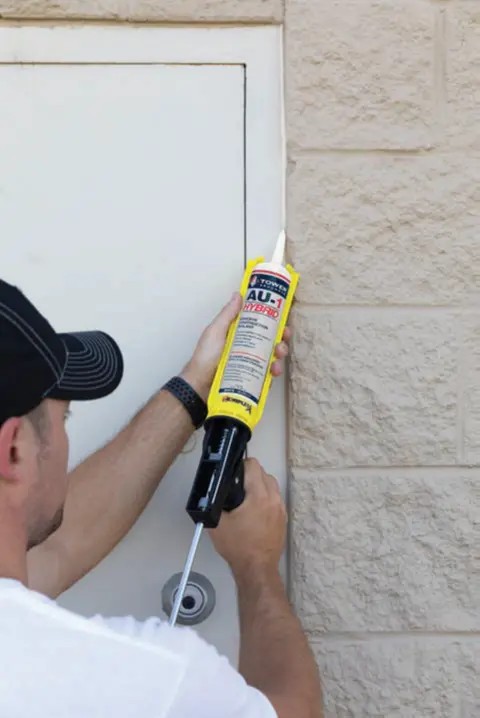
The industry standard for painted window perimeters, door frames, and siding is acrylic urethane elastomeric sealant. Products like Tower AU-1 are engineered to accept paint and maintain adhesion under the thermal cycling that painted joints experience.

Acrylic urethane sealants have high surface energy, which allows paint to wet and bond properly. The sealant is engineered to move with the substrate without stressing the paint layer above it. When applied at the correct joint width and depth, acrylic urethane maintains adhesion and flexibility for decades without peeling or cracking, even on window perimeters exposed to constant thermal cycling.

Tower AU-1 Commercial Construction Sealant accepts paint within 6 to 8 hours of application. This fast paint window keeps the finish schedule moving. The product is rated at ASTM C-920 Class 35, which means it handles ±35% joint movement without cracking or losing adhesion. It bonds to aluminum, vinyl, wood, masonry, and concrete without primer on most substrates. After the paint dries, the joint can handle decades of thermal expansion and contraction without paint failure.

The difference in cost between silicone and acrylic urethane is marginal — a few dollars per cartridge. Tower Sealants AU-1 costs less than silicone. The cost of rework and customer callbacks is substantial. Professional contractors specify acrylic urethane for any painted joint and avoid the problem entirely. Tower Sealants AU-1 costs less than silicone.

Common Mistakes When Sealing Painted Windows, Doors, and Siding

Using 100 Percent Silicone on Any Painted Facade

Silicone has no place on surfaces that will be painted. The paint will fail within months.

Assuming “Siliconized” Caulk Is the Same as Pure Silicone

Siliconized acrylic is paintable. Pure silicone is not. Check the label.

Painting Silicone and Expecting It to Hold

No amount of surface prep, primer, or paint quality will make paint stick to silicone. The chemistry is incompatible.

Specifying Silicone for Window Perimeters Just Because It’s Waterproof

Waterproofing is not the issue on a painted window. The window frame, flashing, and trim system handle the waterproofing. The sealant must accept paint.

Waiting to Decide on the Sealant Until After the Painter Shows Up

Sealant selection must happen before application. Once silicone is installed, removing it and replacing it with acrylic urethane is expensive rework.

Frequently Asked Questions: Silicone and Paint Compatibility

Can I Use Primer to Make Paint Stick to Silicone?

No. Primer cannot make paint stick to silicone. The silicone’s low surface energy repels primer as well as paint. The incompatibility is chemical, not a surface preparation issue. Primer will fail over silicone just like paint will.

What If I Paint Silicone While It’s Still Wet or Uncured?

This does not help. Even wet silicone will not accept paint properly. The chemical incompatibility exists whether the silicone is wet or cured. Painting wet silicone creates a mess and does not solve the adhesion problem.

Can I Sand the Silicone to Roughen the Surface So Paint Will Stick?

Sanding helps slightly but does not solve the problem. The issue is not surface roughness alone; it is the fundamental hydrophobic chemistry of silicone. Sanded silicone may allow a thin coat of paint to sit on the surface longer, but the paint will eventually peel as the sealant flexes underneath.

Is There a Type of Silicone That Accepts Paint?

No. All 100 percent silicone sealants are water-repellent and will not accept paint reliably. Do not use silicone for joints that need to be painted. Use acrylic urethane or another paintable sealant instead. The “paintable silicones” are not real silicones, it’s just a great marketing label for what is technically a hybrid.

What Is the Best Sealant for Painted Window Perimeters?

Acrylic urethane elastomeric sealant rated at ASTM C-920 Class 25 or higher. Tower AU-1 is an acrylic urethane sealant rated at Class 35. It accepts paint within 6-8 hours, bonds without primer to most substrates, and maintains adhesion through decades of thermal cycling on painted window perimeters.

How Long Can I Wait After Sealing Before Painting?

Check the product data sheet for specific cure times. Tower AU-1 accepts paint within 6-8 hours. Most acrylic urethane sealants require 24 hours minimum before painting. Waiting longer is fine; the sealant will be fully cured and ready for paint.

Can I Use Acrylic Latex Caulk Instead of Acrylic Urethane?

Acrylic latex caulk is paintable and appropriate for interior trim with minimal movement. For exterior window perimeters, doors, and siding that experience thermal cycling, specify acrylic urethane rated at ASTM C-920 Class 25 or higher. Acrylic latex is rated much lower (Class 7.5-12.5) and will crack under the movement exterior joints experience.

Conclusion: Stop Using Silicone on Painted Facades

Silicone sealant cannot be painted. The chemistry does not work. Paint beads up, fails to bond, and peels off within months when applied over silicone. The failure is not random or dependent on technique. It is inevitable. This is not a problem that better preparation or more coats of paint will solve.

For any joint on a painted facade that will be exposed to paint — window perimeters, door frames, siding trim, fascia, and soffits — specify an acrylic urethane elastomeric sealant. Tower AU-1 is engineered for this application. It accepts paint within 6-8 hours, bonds to virtually every substrate without primer, and maintains adhesion for decades under thermal cycling and UV exposure.

The cost difference is minimal. The rework cost if you use silicone and the paint fails is substantial. Professional contractors avoid the problem by specifying the right product from the start. Visit towersealants.com or call 866-897-7568 to talk through your painted facade application and confirm the right sealant for your project spec.
Never Miss an Update

Subscribe to our newsletter for the latest tips, product updates,
and industry insights delivered straight to your inbox.

Browse Products

2026 Professional Guide: Why Your Silicone Window Sealant Can’t Be Painted (And What to Use Instead)

Tower Sealants Team

October 13, 2026

12 min read

You sealed the window perimeter with silicone. The sealant looks great until the painter shows up. Two weeks later, the paint is peeling off in sheets. You’re looking at rework costs and customer callbacks. The problem is not the painter’s technique. It’s that silicone sealant and paint are chemically incompatible. Silicone is engineered to repel water. Paint is water-based. When you try to paint over silicone, the paint beads up, fails to bond, and eventually peels off. The problem is worse on window perimeters and door frames where thermal cycling stresses the bond line and cracks widen the peeling.

Professional contractors understand this incompatibility and specify acrylic urethane sealants for any joint that will be painted. The industry-standard solution is not to use silicone where paint is required. This post explains why paint fails over silicone, what happens when you ignore this rule, and which sealants actually accept paint and hold up for decades on painted facades, windows, and trim.

Quick Answer

Silicone sealant cannot be painted because it is hydrophobic (water-repellent) and has low surface energy. Paint beads up on silicone and won’t bond. When applied anyway, paint peels off within 1-3 months, especially on window perimeters and doors exposed to thermal cycling. For painted joints, use acrylic urethane sealants like Tower AU-1, which are engineered to accept paint within 6-8 hours and maintain adhesion through decades of temperature swings.

Why Silicone Repels Paint: The Surface Energy Problem

Nothing sticks to silicone, not even silicone. Silicone sealant is engineered to be hydrophobic (water-repellent). That hydrophobic property is what makes silicone an excellent waterproofing sealant for bathrooms, kitchens, and outdoor applications. The problem is that water-based paint cannot bond to a surface that repels water.

The technical reason is surface energy. Cured silicone sealant has very low surface energy, meaning its surface is extremely smooth and slick — like a waxed car or a lotus leaf. Paint needs a rough or porous surface to grip and spread into an even layer. When paint touches silicone, it beads up like water droplets on an umbrella. The paint cannot wet the surface or spread evenly, no matter how many coats you apply.

If you force paint onto silicone anyway, what you get is uneven coverage, visible brush marks, and a surface that looks unprofessional. More importantly, the paint has not bonded. It is sitting on top of the silicone with no adhesion underneath. Any stress will cause it to peel off in sheets.

What Happens When Paint Meets Silicone: The Peeling Timeline

Painting over silicone follows a predictable failure pattern. Understanding this timeline helps you avoid the problem in the first place.

Immediately After Painting

The painter applies the first coat and immediately sees the problem. The paint does not cover evenly. It beads up and leaves gaps. The brush leaves exposed silicone where the paint receded. The painter may apply a second or third coat trying to cover the silicone completely, but the uneven coverage remains. The joint looks sloppy and unprofessional.

After 1-3 Months

Once the paint fully cures, cracks begin to appear in the paint surface, similar to cracks in dry skin. These cracks develop because silicone underneath continues to flex and move, but the cured paint is rigid and brittle. Silicone can stretch up to 300 percent of its original size and return to shape. Paint cannot do this. When the silicone moves from temperature changes, the paint cracks. When temperature drops in winter or rises in summer, the joint opens and closes. The paint is stressed and breaks.

After 3-6 Months

The cracks widen and the paint begins to peel at the edges. The peeling starts where the paint has pulled away from the silicone bond line. On window perimeters, peeling is especially visible because the joint experiences constant thermal cycling. Direct sun heats the metal frame and the sealant. At night or in winter, temperature drops rapidly. This thermal stress widens the cracks and pushes the peeling further. Homeowners and contractors notice the damage and the complaints start.

After 6-12 Months

Complete paint failure. If you grab the edge of the peeling paint, you can often peel the entire paint layer off like loose wallpaper. The silicone underneath remains intact and waterproof, but the painted aesthetic is ruined. The job requires complete rework. The silicone must be removed and replaced with a paintable sealant, or the paint must be stripped and a primer applied before repainting. Either way, the cost of rework far exceeds the material savings from using silicone.

The Misleading Label: “Siliconized” Doesn’t Mean Paintable

Product labels cause confusion. Many contractors see the word “siliconized” on a caulk tube and think it solves the silicone-paint problem. It does not. Siliconized means silica is in the product. Silica is sand, and helps with adhesion to non porous substrates like glass. Siliconized acrylic latex caulk contains organofunctional silane. The product is still acrylic-based and is still paintable. The term “siliconized” does not mean the product is 100 percent silicone and it does not mean the product cannot be painted.

The problem arises when contractors confuse “siliconized” with “silicone.” A siliconized acrylic caulk is paintable. Pure silicone sealant is not. Check the product data sheet or the label. If it says “100 percent silicone” or “pure silicone,” you cannot paint over it. If it says “acrylic latex” or “acrylic urethane,” it is paintable. The word “siliconized” on an acrylic product is a feature (water resistance) not a limitation.

Where Silicone Works: Painted vs Unpainted Applications

Silicone is an excellent sealant in specific applications where paint is not required. Understanding which applications allow silicone and which require paintable sealants prevents specification errors.

Use Silicone for Glass-to-Metal Joints

Structural glazing, curtainwall weatherseals, and glass-to-frame seals do not require paint. Silicone is the standard product for these applications because of its superior adhesion to glass and metal, UV resistance, and flexibility. Painting silicone on a glass wall would be unusual. The application does not demand it.

Use Silicone for Wet Areas in Kitchens and Bathrooms

Silicone’s water resistance is unmatched. Tub-to-tile seals, sink-to-countertop seals, and bathroom shower seals are silicone applications. These areas may be painted before the sealant is applied, but the sealant itself is not painted afterward. The sealant sits exposed.

Use Silicone for Rooftop Penetrations and Exposed Metal Flashing

Silicone’s UV resistance is excellent for permanent sun exposure. Metal roof seams, vent penetrations, and equipment curb seals benefit from silicone because the joint is exposed and not painted. Silicone also has a high service temperature, which means it can handle the high temperatures of a rooftop.

Don’t Use Silicone for Painted Window Perimeters

This is the most common mistake. Contractors seal the window frame with silicone thinking its waterproofing will help. Then the painter arrives and the product fails. Window perimeters on residential homes, commercial buildings, and painted facades need a paintable sealant.

Don’t Use Silicone for Painted Door Frames

Door frame seals that will be painted with trim require acrylic urethane or other paintable sealants. The painted appearance is part of the specification.

Don’t Use Silicone for Painted Siding Joints

Siding trim, fascia, and soffit joints that will be painted need paintable sealants. Silicone will fail under paint and create callbacks.

The Professional Solution: Acrylic Urethane Sealants for Painted Joints

The industry standard for painted window perimeters, door frames, and siding is acrylic urethane elastomeric sealant. Products like Tower AU-1 are engineered to accept paint and maintain adhesion under the thermal cycling that painted joints experience.

Acrylic urethane sealants have high surface energy, which allows paint to wet and bond properly. The sealant is engineered to move with the substrate without stressing the paint layer above it. When applied at the correct joint width and depth, acrylic urethane maintains adhesion and flexibility for decades without peeling or cracking, even on window perimeters exposed to constant thermal cycling.

Tower AU-1 Commercial Construction Sealant accepts paint within 6 to 8 hours of application. This fast paint window keeps the finish schedule moving. The product is rated at ASTM C-920 Class 35, which means it handles ±35% joint movement without cracking or losing adhesion. It bonds to aluminum, vinyl, wood, masonry, and concrete without primer on most substrates. After the paint dries, the joint can handle decades of thermal expansion and contraction without paint failure.

The difference in cost between silicone and acrylic urethane is marginal — a few dollars per cartridge. Tower Sealants AU-1 costs less than silicone. The cost of rework and customer callbacks is substantial. Professional contractors specify acrylic urethane for any painted joint and avoid the problem entirely. Tower Sealants AU-1 costs less than silicone.

Common Mistakes When Sealing Painted Windows, Doors, and Siding

Using 100 Percent Silicone on Any Painted Facade

Silicone has no place on surfaces that will be painted. The paint will fail within months.

Assuming “Siliconized” Caulk Is the Same as Pure Silicone

Siliconized acrylic is paintable. Pure silicone is not. Check the label.

Painting Silicone and Expecting It to Hold

No amount of surface prep, primer, or paint quality will make paint stick to silicone. The chemistry is incompatible.

Specifying Silicone for Window Perimeters Just Because It’s Waterproof

Waterproofing is not the issue on a painted window. The window frame, flashing, and trim system handle the waterproofing. The sealant must accept paint.

Waiting to Decide on the Sealant Until After the Painter Shows Up

Sealant selection must happen before application. Once silicone is installed, removing it and replacing it with acrylic urethane is expensive rework.

Frequently Asked Questions: Silicone and Paint Compatibility

Can I Use Primer to Make Paint Stick to Silicone?

No. Primer cannot make paint stick to silicone. The silicone’s low surface energy repels primer as well as paint. The incompatibility is chemical, not a surface preparation issue. Primer will fail over silicone just like paint will.

What If I Paint Silicone While It’s Still Wet or Uncured?

This does not help. Even wet silicone will not accept paint properly. The chemical incompatibility exists whether the silicone is wet or cured. Painting wet silicone creates a mess and does not solve the adhesion problem.

Can I Sand the Silicone to Roughen the Surface So Paint Will Stick?

Sanding helps slightly but does not solve the problem. The issue is not surface roughness alone; it is the fundamental hydrophobic chemistry of silicone. Sanded silicone may allow a thin coat of paint to sit on the surface longer, but the paint will eventually peel as the sealant flexes underneath.

Is There a Type of Silicone That Accepts Paint?

No. All 100 percent silicone sealants are water-repellent and will not accept paint reliably. Do not use silicone for joints that need to be painted. Use acrylic urethane or another paintable sealant instead. The “paintable silicones” are not real silicones, it’s just a great marketing label for what is technically a hybrid.

What Is the Best Sealant for Painted Window Perimeters?

Acrylic urethane elastomeric sealant rated at ASTM C-920 Class 25 or higher. Tower AU-1 is an acrylic urethane sealant rated at Class 35. It accepts paint within 6-8 hours, bonds without primer to most substrates, and maintains adhesion through decades of thermal cycling on painted window perimeters.

How Long Can I Wait After Sealing Before Painting?

Check the product data sheet for specific cure times. Tower AU-1 accepts paint within 6-8 hours. Most acrylic urethane sealants require 24 hours minimum before painting. Waiting longer is fine; the sealant will be fully cured and ready for paint.

Can I Use Acrylic Latex Caulk Instead of Acrylic Urethane?

Acrylic latex caulk is paintable and appropriate for interior trim with minimal movement. For exterior window perimeters, doors, and siding that experience thermal cycling, specify acrylic urethane rated at ASTM C-920 Class 25 or higher. Acrylic latex is rated much lower (Class 7.5-12.5) and will crack under the movement exterior joints experience.

Conclusion: Stop Using Silicone on Painted Facades

Silicone sealant cannot be painted. The chemistry does not work. Paint beads up, fails to bond, and peels off within months when applied over silicone. The failure is not random or dependent on technique. It is inevitable. This is not a problem that better preparation or more coats of paint will solve.

For any joint on a painted facade that will be exposed to paint — window perimeters, door frames, siding trim, fascia, and soffits — specify an acrylic urethane elastomeric sealant. Tower AU-1 is engineered for this application. It accepts paint within 6-8 hours, bonds to virtually every substrate without primer, and maintains adhesion for decades under thermal cycling and UV exposure.

The cost difference is minimal. The rework cost if you use silicone and the paint fails is substantial. Professional contractors avoid the problem by specifying the right product from the start. Visit towersealants.com or call 866-897-7568 to talk through your painted facade application and confirm the right sealant for your project spec.
Keep reading

Related articles

    • Au 1 hybrid tube application door
    • Commercial Construction
    • How-To Guides
    • Industry Insights
    2026 Professional Guide: What Is a Sealant in Construction

    A sealant is an elastomeric material applied to joints in building assemblies to create a…

    • A man showing how to install liquid flashing membrane
    • Building Envelope
    • Application Tips
    • How-To Guides
    • Industry Insights
    2026 Professional Guide: How to Install a Liquid Flashing Membrane

    Knowing how to install a liquid flashing membrane correctly is the difference between a building…

    • Worker applying sealant to a vertical joint between concrete wall panels on a commercial building.
    • Commercial Construction
    • How-To Guides
    • Industry Insights
    2026 Professional Guide: Concrete Sealant Selection: Crack Repair vs Joint Sealing vs Control Joints

    Concrete sealant selection goes wrong before the cartridge is ever loaded. The mistake happens at…

The Dispatch

One letter, first
Monday
of every
month.

One letter, first Monday of every month.

New essays, product notes, the occasional field photograph. No spam, no upsell. Unsubscribe in a click.

Get in Touch

Enter your details and we'll follow up shortly.